All of us suffer from self-control failures at times—we procrastinate, give in to temptations, and fail to do the things we know we should. In this book, Menno Henselmans explains how to overcome that. In our free version of The Science of Self-Control summary, you’ll learn how the human mind works, and get an overview of 53 tips and strategies to take control of your mind and body, improve your productivity, motivation, health, fitness, and attain success in life.
What is The Science of Self-Control about?
Self-control is essential for success for all aspects of life, from diet adherence to managing exercise and how we direct our focus. In a famous Stanford experiment, children were given an option to have 1 marshmallow now, or to wait 15 minutes for 2 marshmallows. Those who held out for 2 marshmallows were found to be more successful later in life.
Yet, all of us suffer from self-control failures. Menno Henselmans is a fitness educator and scientific researcher who spent more than 10 years studying and applying the science of self-control to his life and business. In this book about willpower, he provides a comprehensive review of research in neuroscience and behavioral psychology to explain how the human brain works, and presents 53 practical tips and strategies to improve your productivity, exercise habits, motivation, make your diet healthy, and more.
How The Brain and Willpower Works
Do you believe that you lose self-control and give in to temptations because you run out of willpower? Well, according to Menno Henselmans, that’s not entirely true. In his book, he shares basic psychology and empirical research to explain why self-control failures happen.
In a nutshell, our willpower fails not because it runs out but because the logical part of our brain becomes exhausted from boring or effortful tasks. When this happens, the impulsive side of the brain takes over, leading to poor choices.
Since we all operate with limited resources, relying on willpower alone is an ineffective strategy. Instead, Henselmans highlights the importance of implementation intentions—preplanned strategies that help automate decisions and prevent self-control failures. For example, instead of hoping to avoid unhealthy snacks, you can set a rule: “If I feel hungry between meals, I will drink a glass of water first.”
If you’ve tried to resist temptation a couple of times and failed, it’s not due to a lack of willpower but rather a lack of structure in your decision-making. By using implementation intentions and understanding the basic psychology behind self-control, you can make better choices and improve your ability to stay disciplined in the long run.
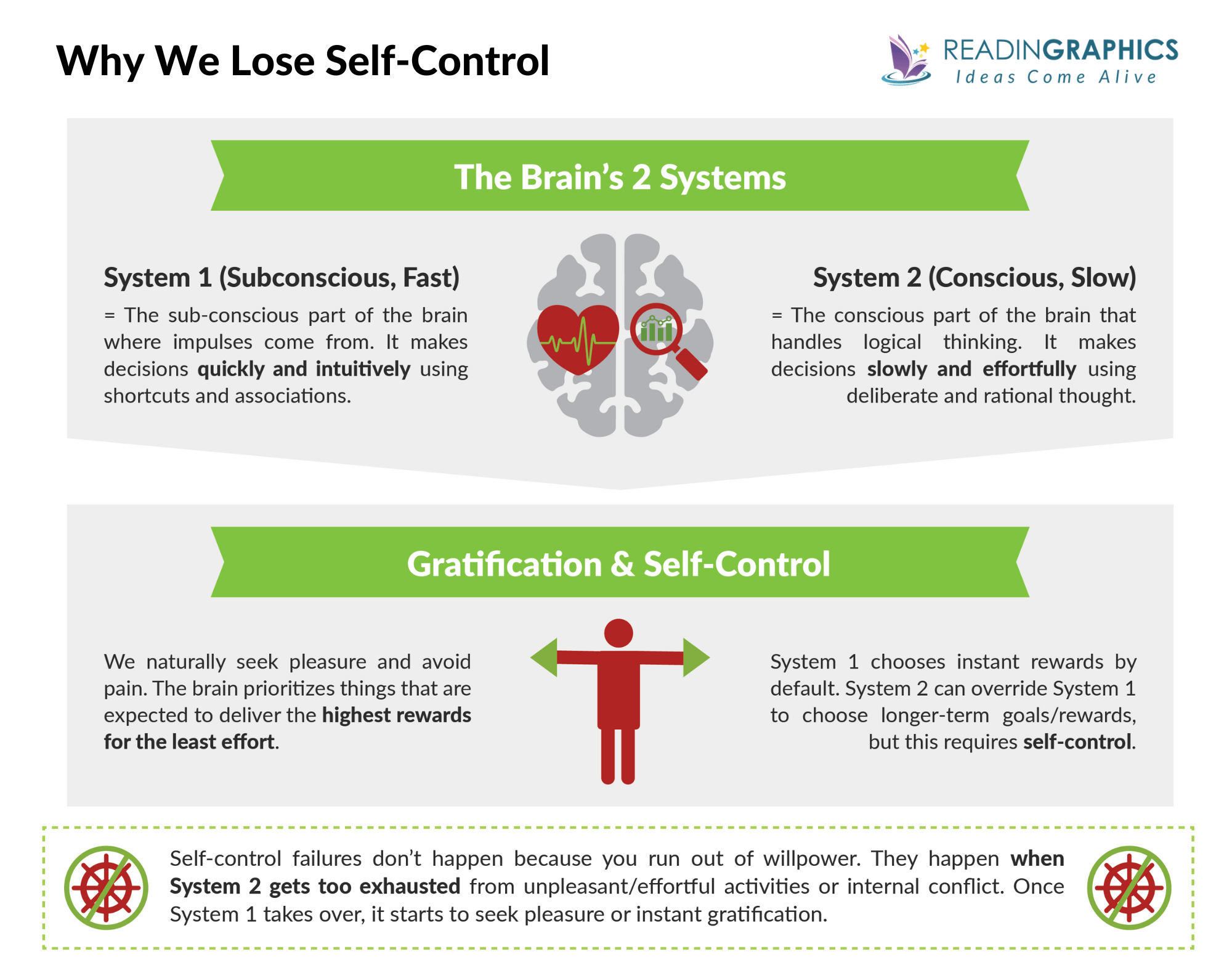
Here’s a visual summary explaining this further:
The Brain’s 2 Systems
Nobel Prize winner Daniel Kahneman describes the human brain as having two systems that regulate brain activity and decision-making:
- System 1 is the subconscious part of the brain responsible for impulses and “gut feelings.” It processes large amounts of information rapidly, intuitively, and effortlessly. However, because it relies on shortcuts and associations, it is prone to errors.
- System 2 is the conscious part of the brain that handles logical thinking. It processes data deliberately and rationally but requires effort and time. Since System 1 automatically filters the vast amount of information around us, only a small portion reaches System 2 for deeper analysis. For example, when you feel hungry, System 1 quickly identifies food options, while System 2 evaluates them and decides what to eat.
A crucial difference between individuals lies in their ability to exercise flexible control over these systems. While System 1 tends to prioritize instant gratification, System 2 enables conscious decision-making for long-term goals. Control among people varies depending on factors like discipline, habits, and environmental influences. Some individuals can consistently override System 1, choosing, for example, to go to the gym instead of eating potato chips, while others struggle with self-regulation.
Studies on brain regions associated with self-control suggest that strengthening System 2 through intentional practice, such as mindfulness, goal-setting, and delayed gratification—can improve decision-making and long-term success.
What is Willpower and Why it Fails
With advances in neurosciences, we can now study what happens in our brain when self-control fails. And, this is what scientists have discovered:
• System 2 gets progressively more tired and less active (i) when you do something unpleasant/effortful, or (ii) when there’s conflict between the two systems.
• When System 2 gets too exhausted, System 1 takes over to seek more immediate rewards (often at the expense of your long-term goals).
In short, self-control failures don’t occur because you run out of willpower. They occur because you get mentally exhausted from effortful, unpleasant activities, and your attention shifts to more immediate gratifications.
In our complete 17-page version of The Science of Self-Control summary, you can get more details of related research findings, to help you understand how exactly your brain and willpower works.
Improving Self-Control in Real Life
Building on this knowledge of science behind self-control fails, Menno Henselmans then goes on to share 53 tips/strategies to cultivate indomitable willpower in real life, each backed by further scientific research/background. These include:
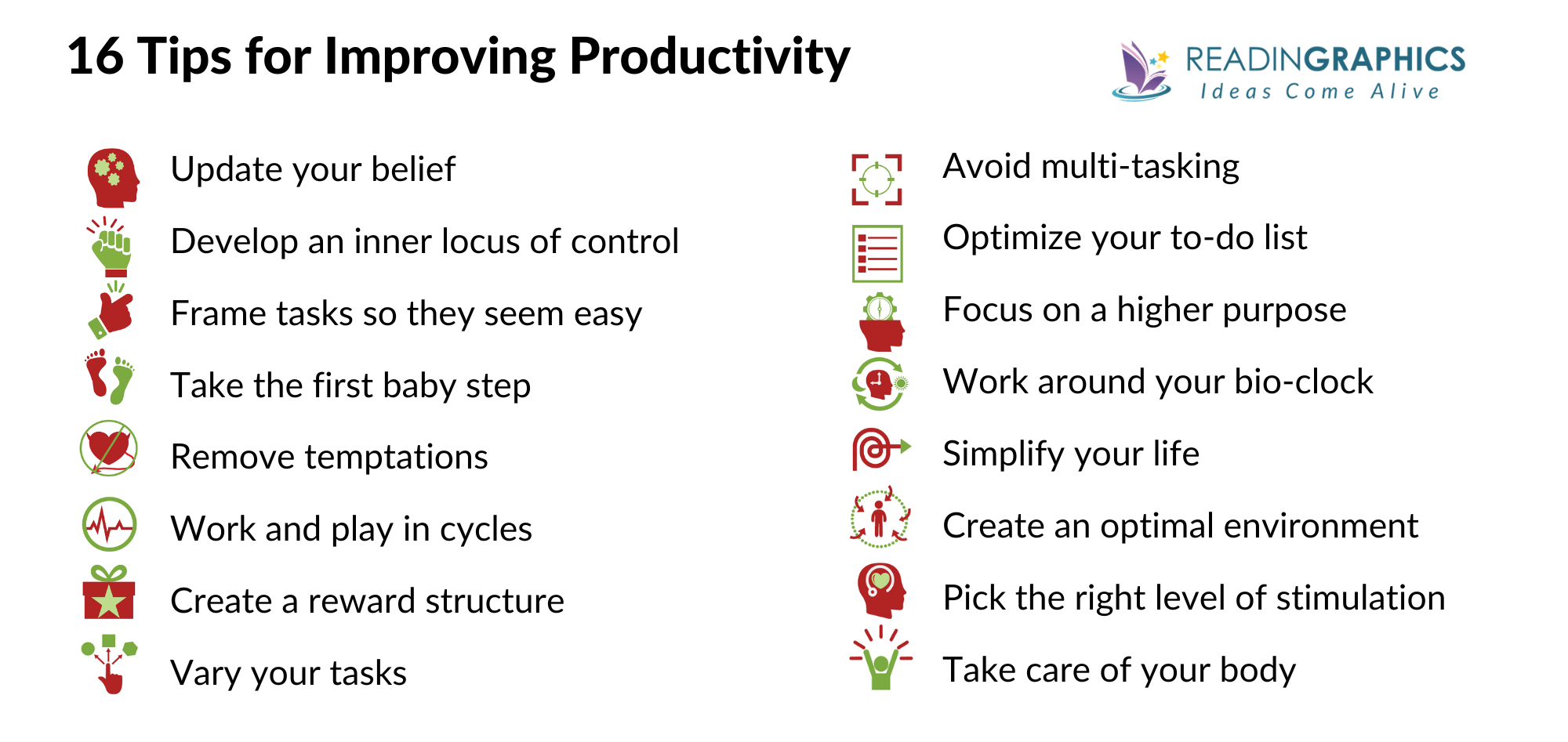
• 16 tips for improving productivity;
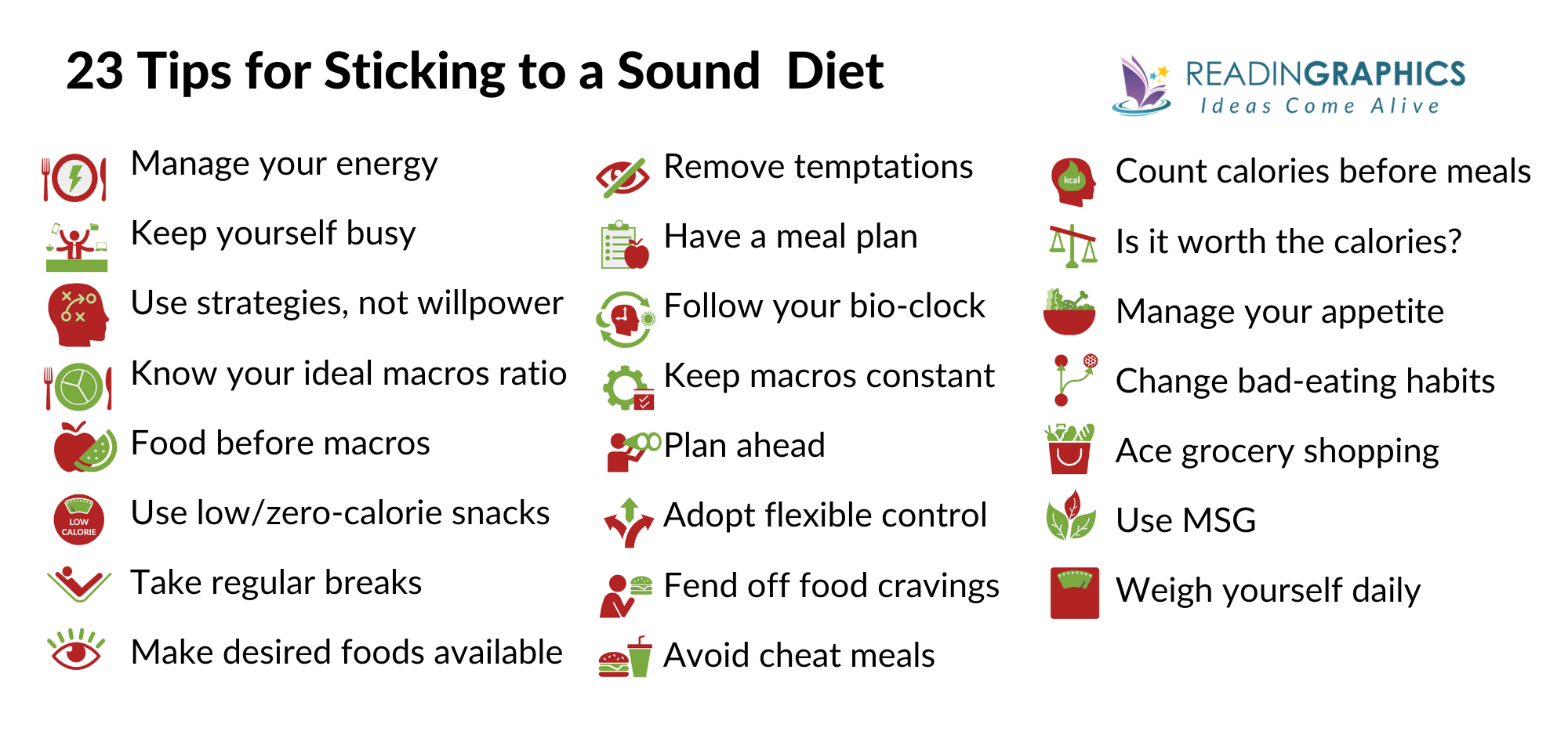
• 23 tips for sticking to a sound diet;
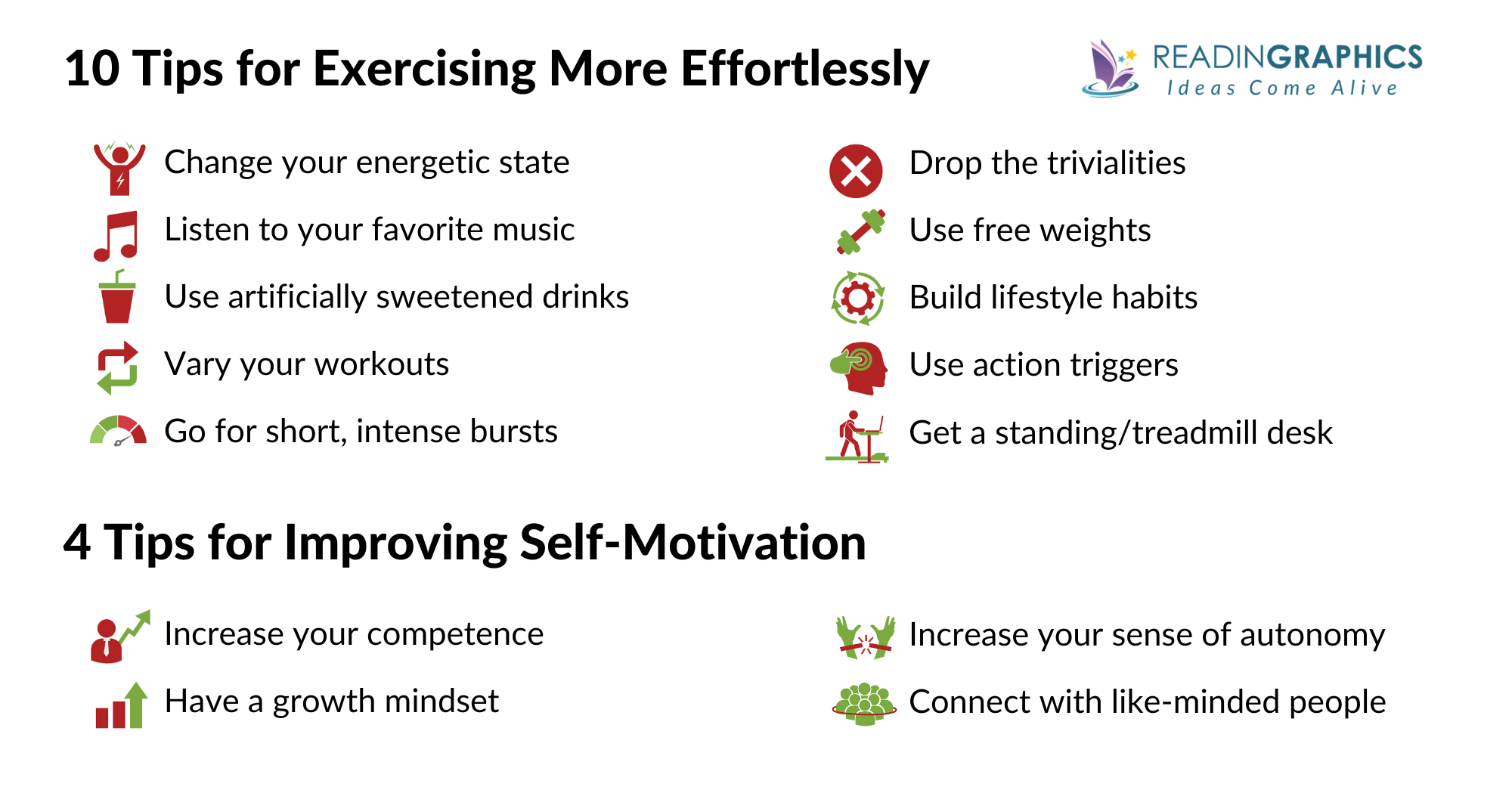
• 10 tips for exercising more effortlessly; and
• 4 tips for improving your self-motivation.
We’ll now cover 1 example from each category. Feel free to check out our full version of The Science of Self-Control summary for all 53 tips!
Sample Productivity Tip: Update your Belief
Realize that you already have unlimited willpower. Any limits you experience are psychological, not physiological.
The placebo effect occurs when you experience a physical effect just because you expect it to happen. For example, athletes given fake steroids gained real weight and strength as if they had consumed real steroids, and participants who underwent an hour of fake brain-training showed real IQ improvement.
The nocebo effect acts in an opposite, harmful way. People who believed they overdosed on drugs showed physical signs of an overdose (even though they only took placebos). A man actually died because he thought he was being decapitated (when some pranksters merely hit his neck with a wet cloth).
Realize that feelings of fatigue are just feelings. Your mind and body can still continue if you choose to. Here’s a quick overview of the remaining productivity tips/strategies:
Sample Dieting Tip: Manage Your Energy
You don’t need food to be mentally energized. Food provides physical energy, not mental energy. A physical energy deficit will not hurt your cognitive functions (i.e maximum attention span, comprehension, e.t.c) mood, or sleep quality. Numerous research studies have shown that dietary energy-deficit does not affect mental or physical well-being, so long as there’s no nutritional deficiency. For example:
• In a 2-day study, subjects consumed either a maintenance diet of 2294 calories a day, or a starvation diet of 313 calories a day. There were no noticeable differences between the 2 groups, except the 2nd group felt hungrier.
• Other studies involving soldiers and non-obese participants found no differences in mood, psychological or physical performance, despite a 40% energy deficit for up to 1 month.
In various experiments, participants didn’t feel a difference when they were unaware of their energy deficits or dietary restrictions. However, nocebo effects kicked in once they perceived real or imagined differences in their diet. In a study, 2 groups were given the same milkshake. The 1st group thought it was a high-calorie milkshake while the 2nd group thought it was a low-calorie milkshake. The 1st group not only reported higher levels of satisfaction, but their bodies actually generated lower levels of the hunger hormone ghrelin.
An energy deficit doesn’t hurt us, and can even benefit us since we feel and operate better when we’re lean. Research has consistently found weight-loss to positively affect all aspects of health. There’s also a strong correlation between longer lifespans and being consistently lean.
Here are a few ways to support sustaining weight loss:
Eat at consistent times, as irregular eating patterns can disrupt metabolism and hunger signals, making it harder to stick to a diet healthy enough for long-term success.
When it comes to dietary approaches, and what’s best between low-carb and high-carb diets, Henselman sides with low-carb diets, emphasizing their benefits for fat loss and metabolic health.
Understanding the psychology of cravings is crucial, as indulging in cheat meals increases cravings, making it harder to stay on track with a structured eating plan.
Mild food deprivation has been linked to improved alertness and memory, further supporting the idea that strategic calorie control can enhance both physical and mental performance.
Here’s a quick overview of the remaining dieting tips/strategies:
Sample Exercise Tip: Change Your Energetic State
If you’re feeling too lethargic or mentally tired to exercise, don’t force yourself. Instead, change your energetic state to change your motivation. You can:
• Take a cold shower; or
• Use caffeine strategically. Pre-schedule your workouts, then take a dose of caffeine 30 minutes before each workout. Limit your weekly caffeine consumption to 700mg to avoid caffeine tolerance/withdrawal. Anhydrous caffeine powder or capsules are typically more effective than coffee.
Do check out the remaining exercise tips/strategies in our full 17-page summary of The Science of Self-Control!
Sample Motivation Tip: Improve Your Competence
The better you are at something, the more confident and motivated you feel. To motivate yourself to do something, get good at it.
To improve your training and diet, research your workouts and recipes, or talk to others who’re better at them.
Track your progress, including (i) your weight, (ii) body composition, and (iii) workout performance (e.g. weight x rep, distances, running times, heart rates)
Getting More from “The Science of Self-Control”
Obviously, mastering your self-control takes time and practice. The good news is, that this book about willpower comes with loads of insights and practical tips to help you understand the fundamentals of self-control and apply them in real life. Ready to start taking control of your willpower and life? If so, do check out our full book summary bundle which includes an infographic, 17-page text summary, and a 36-minute audio summary.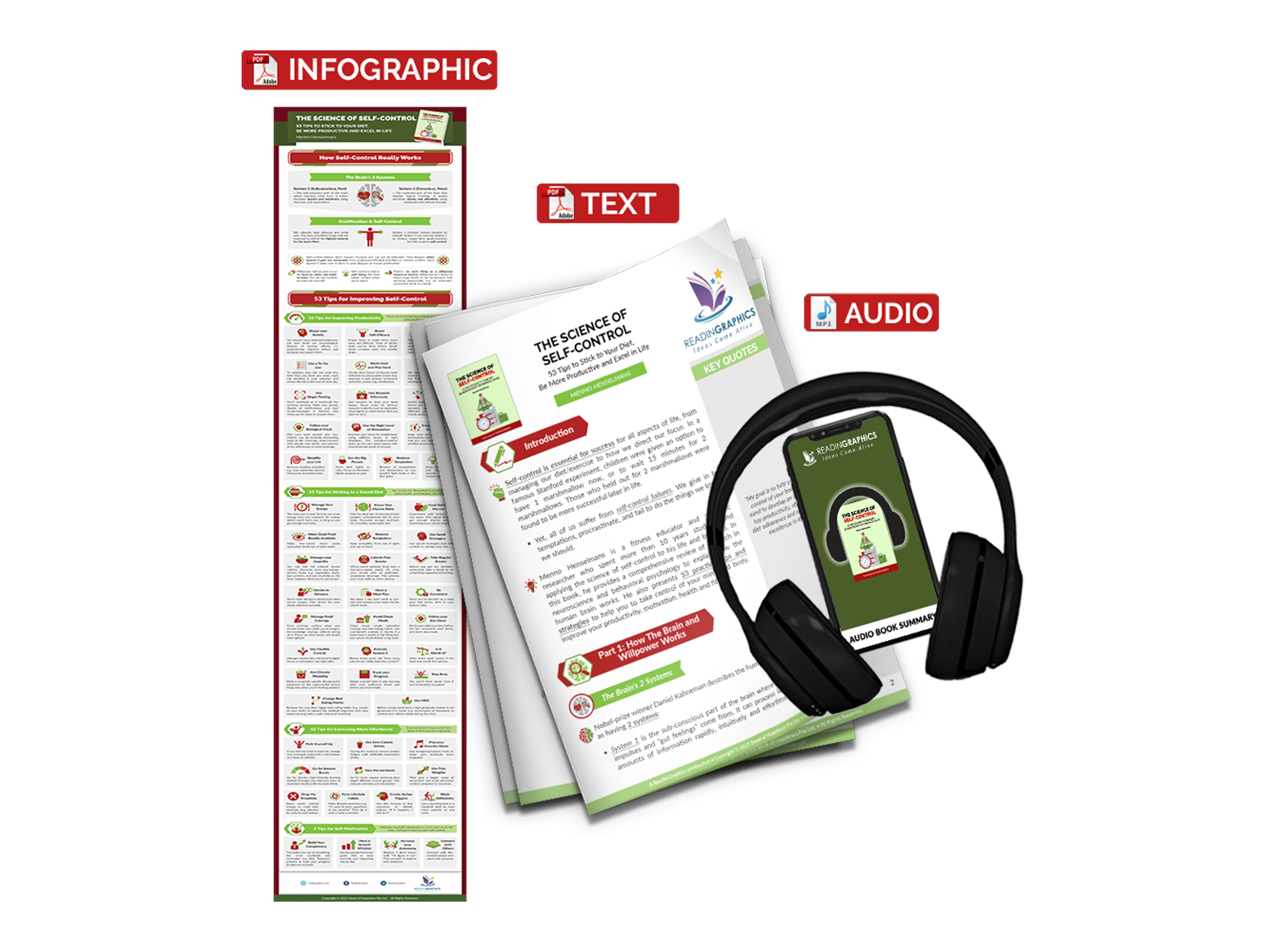
This is a clearly-structured book written in a casual and humorous style. Besides the insights and examples in this summary, the book includes hundreds of scientific references and research studies/experiments to explain the science self-control, how each tip works and why you should apply it. You can purchase the book here or visit mennohenselmans.com for more details, resources, recipes and tips.
Or, get more insights from Dr Kelly McGonigal in The Willpower Instinct summary.
Who should read this:
• Anyone who wishes to improve their self-control and willpower;
• People who want specific strategies or tips for dieting, weight-loss, better health, fitness, productivity and motivation.

The Science of Self-Control Chapters
See All Chapters (Click to expand)
Our summaries are reworded and reorganized for clarity and conciseness. Here’s the full chapter listing from The Science of Self-Control by Menno Henselmans, to give an overview of the original content structure in the book.
Introduction
Chapter 1: 2-System Theory
Chapter 2: Thy Will Be Done
– The Evolution of Self-Control
Chapter 3: How to Be More Productive
– Why Willpower Is Not Like a Muscle
– Productivity Tip 1: A Lethal Illusion
– Productivity Tip 2: The Locus of Control
– Productivity Tip 3: Framing for Self-Efficacy
– Productivity Tip 4: How to Use the Zeigarnik Effect to Stop Procrastinating
– Productivity Tip 5: There’s No Sin Without Temptation
– Productivity Tip 6: How to Do More Work While Working Less
o Exercise
o Hydrotherapy
o Work Hard, Play Hard
o Power Napping
o Meditation
o Prayer
o The Imaginary Break
– Productivity Tip 7: How (Not) to Incentivize Yourself and Others
– Productivity Tip 8: Vary Up Your Stimulus Modalities
– Productivity Tip 9: To Multitask or Not to Multitask?
o Tip 9.1: “Do Not Disturb”
o Tip 9.2: No Peeking
o Tip 9.3: Batching
o Tip 9.4: The Right Number of Projects
– Productivity Tip 10: How to Optimize Your To-Do List
o Tip 10.1: Beware of Overuse
o Tip 10.2: How to Structure It
o Tip 10.3: Setting Deadlines
o Tip 10.4: When to Check It
– Productivity Tip 11: Wipe the Bureaucracy from Your Mind
– Productivity Tip 12: Schedule Work with Your Circadian Rhythm
– Productivity Tip 13: Why Obama Only Wore 2 Colors of Suits
– Productivity Tip 14: The Optimal Work Environment
– Productivity Tip 15: The Yerkes–Dodson Law
– Productivity Tip 16: Mens Sana in Corpore Sano
Chapter 4: How to Stick to Your Diet
– Diet Tip 1: The Flesh Is Strong, but the Mind Is Weak
o But what about Blood Sugar?
o Postprandial Somnolence
– Diet Tip 2: Hustle
– Diet Tip 3: Why “Trying Harder” Doesn’t Work
– Diet Tip 4: The Best Macros for Adherence
– Diet Tip 5: Interpreting Personal Preference
– Diet Tip 6: Empty Rewards
– Diet Tip 7: Breaks and Adherence
– Diet Tip 8: “Don’t Bind Bacon to the Cat’s Back”
– Diet Tip 9: Make a Meal Plan
– Diet Tip 10: Eat with Circadian Rhythm
– Diet Tip 11: Constant Macros
– Diet Tip 12: Projection Bias
– Diet Tip 13: Don’t Try to Be a Robot
o Tip 13.1: Failure as Learning
o Tip 13.2: Lifestyle Perspective
o Tip 13.3: Calories as Budget
o Tip 13.4: Don’t Spend It All
o Tip 13.5: Think Outside the Lunchbox
– Diet Tip 14: How to Stop Cravings
o Tip 14.1: Mindfulness
o Tip 14.2: Episodic Future Thinking
o Tip 14.3: Learning to Like Healthy Food
– Diet Tip 15: How to Cheat Your Diet
o Tip 15.1: IIFYM
o Tip 15.2: Think Like an Economist
o Tip 15.3: Low-Calorie Comfort Food
o Tip 15.4: Cheat Meals
o Tip 15.5: Eating Out
o Tip 15.6: Sushi Etiquette
– Diet Tip 16: Do This Before Every Meal
– Diet Tip 17: Do This After Every Meal
– Diet Tip 18: How to Manage Appetite
o Tip 18.1: Eat More, Not Less
o Tip 18.2: Moderate Protein
o Tip 18.3: Fiber Intake
o Tip 18.4: Mindful Eating
– Diet Tip 19: Minimize Decision Fatigue
– Diet Tip 20: Build Activity Habits
– Diet Tip 21: Use Action Triggers
– Diet Tip 22: Change Bad Habits
– Diet Tip 23: Get a Standing Desk
– Diet Tip 24: Use Availability Effects
– Diet Tip 25: The Grocery Skill
o Tip 25.1: Shop Satiated
o Tip 25.2: Grocery List Discipline
o Tip 25.3: Safe Zones
o Tip 25.4: List Organization
o Tip 25.5: Order Online
– Diet Tip 26: Umami Preloads
– Diet Tip 27: How Often to Weigh Yourself
Chapter 5: How to Make Exercise Less Effortful
– Workout Tip 1: Use Caffeine (More) Strategically
– Workout Tip 2: Listen to the Right Music
– Workout Tip 3: Intra-Workout Drinks
– Workout Tip 4: Optimize Training Frequency
– Workout Tip 5: Optimize Training Intensity
– Workout Tip 6: Use Free Weights
Chapter 6: How to Motivate Yourself
– What Is Motivation and How Do We Get It?
– Motivation Tip 1: Cultivate Competence
o Tip 1.1: Research
o Tip 1.2: Tracking
– Motivation Tip 2: Set Goals
– Motivation Tip 3: Become More Autonomous
– Motivation Tip 4: Connect
o Tip 4.1: Find a Community
o Tip 4.2: Purpose as Motivation
About the Author of The Science of Self-Control
The Science of Self-Control: 53 Tips to Stick to Your Diet, Be More Productive and Excel in Life was written by Menno Henselmans–a German physique coach, scientific researcher, educator, and speaker. He owns a top fitness website, and is a board member of several nutrition and fitness organizations, and was senior advisor for the University of Cambridge’s ReachSci project. His works have been featured in numerous publications such as Men’s Health, The Sunday Times, and HuffPost. Henselmans was formerly a business consultant. He holds a BSc from the international honor’s college UCU, and MSc from the University of Warwick.
The Science of Self-Control Quotes
“Unlimited self-control is already achievable by your brain: we just need to learn how to unleash it.”
“If you don’t believe you can persevere or control yourself any further, you have already lost the battle.”
“A happy brain is a productive brain.”
“Learning how to be lean year-round is a self-discovery journey. Others can provide you with a map, but you’ll have to find your own path.”
“The road to success is easy to follow when it’s the path of least resistance.”
“Feeding a craving makes it stronger.”
“Instead of trying to fight your feelings, change your feelings.”
“If something is not actionable, it doesn’t change your behavior.”
“Devote yourself to the journey, not the destination.”
Click here to download The Science of Self-Control summary & infographic