What do most entrepreneurs want? Freedom, flexibility, and financial success. Yet even with a perfect business growth strategy, many end up overwhelmed, stuck, or burning out trying to stay afloat.
In this post, we’ll break down a practical roadmap for sustainable business growth. We’ll cover everything you need to know to grow your business without burning out or getting stuck in the grind. Let’s dive in.
How to Grow Your Business (Without Burning Out!)
Growth can be harder than it looks. Many business owners either get stuck in the day-to-day, unable to scale without chaos, or try to grow too fast and break everything in the process.
That’s because business growth strategy isn’t just about hustle. It’s about systems and scalable execution. The best course of action includes:
- Identifying which growth stage you’re in
- Installing a structure to support scaling
- Choosing one growth lever to test and refine
Let’s look at these one-by-one.
3 Stages of Business Growth
Many founders fail to grow because they fall into the trap of working IN their business instead of ON it. The true goal is to build a business that works without you so you can grow without worrying about the chaos, or the cash flow.
But before you can build a viable growth strategy, you need to prepare your business for the growing pains it will receive as it grows.
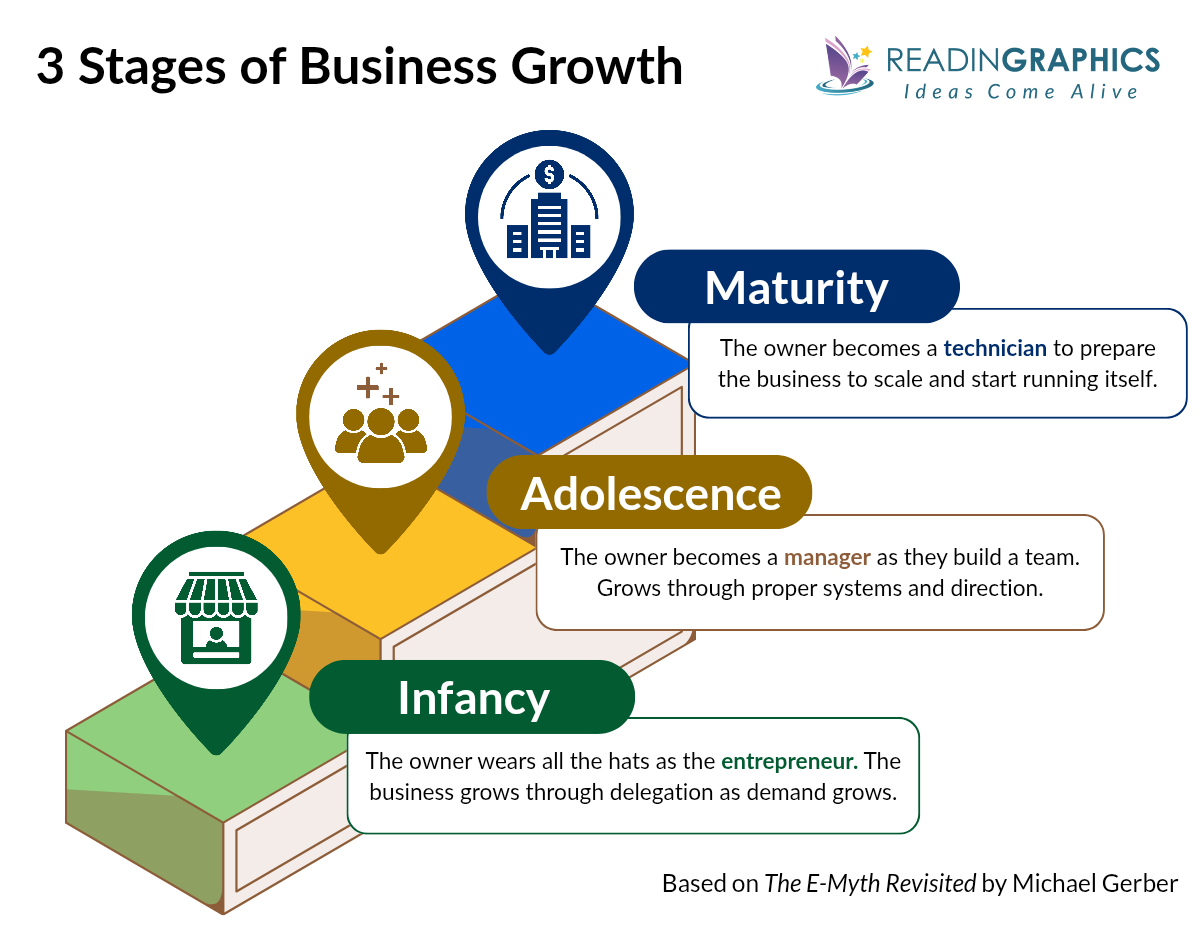
Like a customer lifecycle, businesses and business owners have stages too. In The E-Myth Revisited, Michael Gerber outlines 3 core stages that every business must go through.
-
- Infancy – This is where you focus on market development and capturing your audience. If you are a sole business owner, you might have a one-man business model, and you wear all the hats. If you want to kickstart your strategic growth, you’ll eventually need to delegate as you go up. Most small businesses get stuck here because they never build up their team.
- Adolescence – At this stage, your market share is rising. You start hiring help—but without clear systems, you spend more time managing people than growing the business. This is where many small businesses collapse under their own weight as their customer base gets bigger.
- Maturity – This is where you, as the owner, shift from technician to strategist. At this stage, customer retention is just as important as customer acquisition. But instead of focusing on the small stuff, you focus on broader, strategic growth strategies.
You can learn more about these stages as well as key action steps to take on your journey with our free book summary of The E-Myth Revisited.
As your business matures, it will eventually run independently of you…with the right systems in place. That’s where frameworks that stabilize your business as it grows will come in handy.
Preparing Your Business for Growth: The EOS® Framework
Before setting up a business growth strategy, you need to install the right operating system to keep things running smoothly. The Entrepreneurial Operating System (EOS®) is a practical, proven toolkit to help you organize and lead a growth-ready business.
The EOS® system helps you clarify your vision and long-term goals, build traction with clear accountability and execution and strengthen your team and leadership structure.
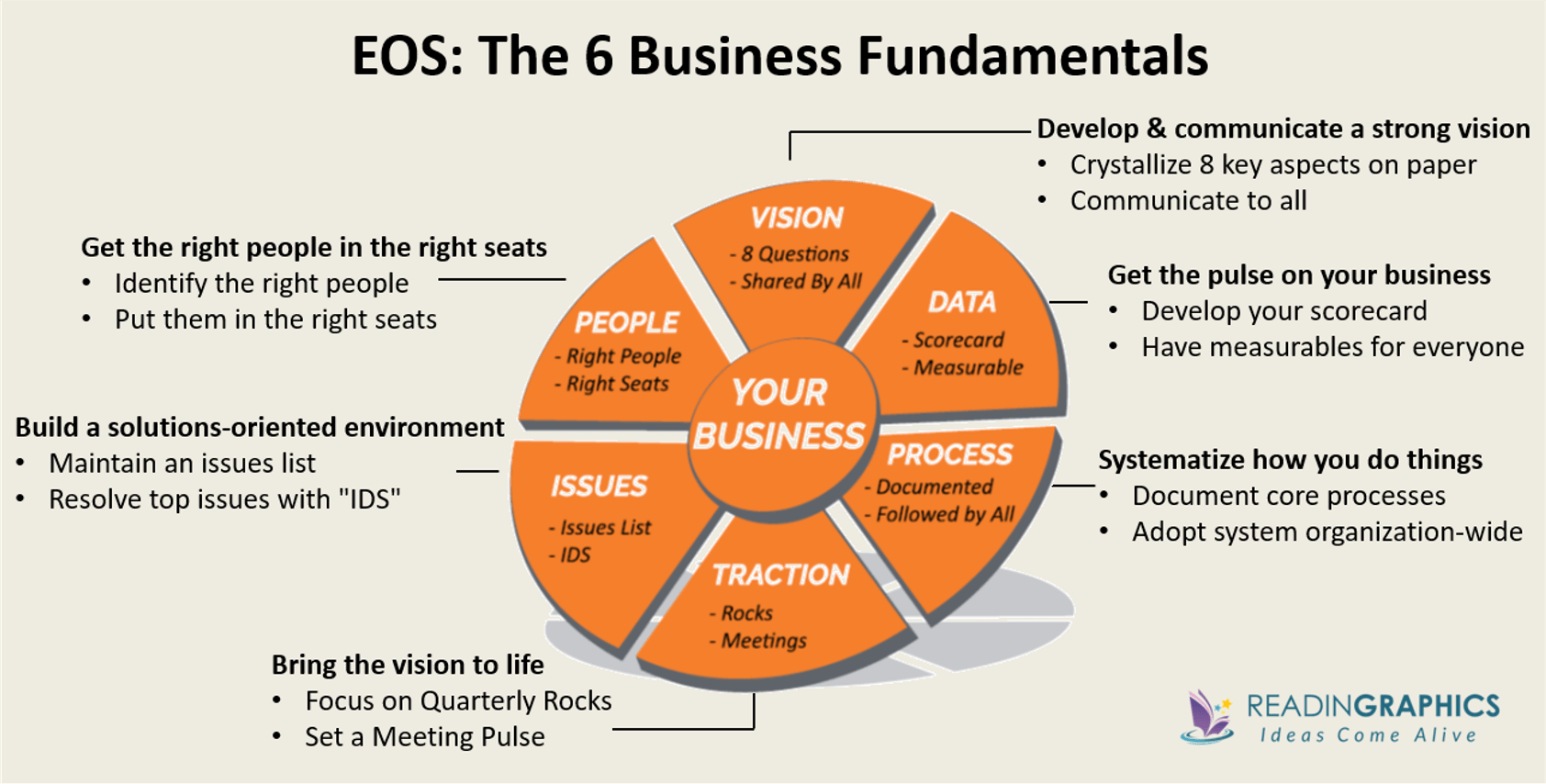
This system has 6 components:
- Vision – Define your long-term goals and strategic direction. Your team needs to know where you’re going and why it matters. A clear vision keeps everyone aligned and moving in the same direction.
- People – Get the right people in the right seats. Align roles with strengths so that everyone can thrive and contribute.
- Data – Run your business on numbers, not opinions. Tracking key metrics consistently to get insights that guide impactful decision-making.
- Issues – Solve root problems. Instead of putting out fires daily, identify the core issues, discuss them with your team, and put in place lasting solutions.
- Process – Document your core processes to scale. Well-defined workflows bring consistency, improve efficiency, and allow you to delegate as you grow.
- Traction – Build discipline and accountability across the team. With regular check-ins and clear priorities, your team stays focused, delivers results, and executes on the company vision.
Learn more about the EOS® system from our free Traction summary.
Using EOS® helps you stop spinning plates, install growth strategies seamlessly and start gaining real traction.
5 Business Strategies for Growth (With Real-World Examples)
Once you’ve got the foundation in place, it’s time to scale. Here are 5 proven growth levers that top companies use. These strategies often come up in bestselling business books, and many business owners use them to build their own business growth strategy.
1. Market Expansion and Development
Expanding your horizon outward—through new markets such as a new area or demographic—can help increase your market share and fuel your growth.
When this works: when your product or service is meeting current customer needs, and could accommodate a larger customer base.
For example, Starbucks coffee was already well-loved before they expanded. Then, they started to cater not just to existing coffee-lovers, but to the general public as well. Then they scaled to new geographies, locations, and audiences.
If you’re considering this market development strategy, ask these questions:
- Which groups could benefit from my product/service?
- How do they differ from my current audience?
- How do you reach this new market?
Expanding your user base doesn’t always mean international expansion or international markets. Sometimes it means business diversification: looking into new customer groups you haven’t tapped into yet. Doing the necessary market research and gathering customer feedback can go a long way for this business growth strategy.
2. Market Penetration
Growth doesn’t always need massive customer acquisition. Market penetration strategy is about selling more to your existing customer base. This can boost revenue while lowering customer acquisition costs.
When this works: When your customers are happy, engaged, and trust your brand. This business growth strategy works well if you have good customer retention and loyalty already.
Amazon introduced Prime to deepen customer loyalty. By bundling fast shipping, streaming, and other perks into a single membership, they increased buy frequency and customer lifetime value.
If you’re considering this market penetration strategy, ask yourself:
- What unmet needs do my current customers still have?
- How can I increase their average spend or frequency?
- Could I offer bundles, upsells, subscriptions, or premium tiers?
Focusing on market penetration strategy means staying close to your customers and continuously delivering added value. This business strategy is a low-risk, high-leverage growth path.
3. Product Development and Innovation
Sometimes strategic growth doesn’t come from expanding market share. It comes from giving your existing market something better.
Product development and innovation strategy means evolving your core offer to deliver more value.
When this works: When your product is becoming outdated, competitors are catching up, or customer expectations have shifted. Innovation helps you stay relevant and stand out.
Apple started with personal computers but evolved into a leader in consumer electronics by continuously innovating: iPods, iPhones, and iPads redefined their product landscape and revolutionized multiple industries.
If you’re considering this product development strategy, ask yourself:
- Is my product still solving today’s problems effectively?
- What features or experiences could I enhance or add?
- What future needs can I anticipate now?
Product development strategy doesn’t always mean massive reinvention. Small, thoughtful improvements based on customer feedback can lead to big growth too.
4. Boost Operational Efficiency
Not all growth requires customer growth. Sometimes, it’s about expanding and managing internal growth with your team and resources.
Improving operational efficiency means streamlining your processes so you can grow with changing market dynamics and scale without proportionally increasing costs.
When this works: When you’re experiencing growing pains, bottlenecks, or inconsistent results. Operational upgrades can free up capacity, improve customer service and reduce waste.
McDonald’s became a global franchise powerhouse by systematizing everything—food prep, order flow, training—so they could deliver a consistent customer experience at scale.
If you’re considering this strategy, ask yourself:
- Where are we losing time, money, or quality?
- What tasks can be standardized, automated, or delegated?
- Are there tools or processes that could help us do more with less?
Operational efficiency isn’t glamorous, but stabilizing your internal growth is one of the most powerful ways to scale upward.
5. Grow Through Partnerships
You don’t always have to build new audiences from scratch. Sometimes, the fastest path to growth is teaming up with someone who already has the audience you want.
When this works: When another business shares your target customer but offers a different, complementary product or service. The right partnership can be a win-win.
Partnerships can mean co-marketing through a partner marketing program, whether on social media or offline. You can also go into product bundling, tech integration to increase your user base or even expanding loyalty program perks to include your partner brand.
Spotify partnered with Uber to allow riders to play their own music during rides. This creative collaboration helped both brands enhance customer experience and expand their reach.
If you’re considering this strategy, ask yourself:
- Who already serves the audience I want to reach?
- How could we create value together?
- What kind of collaboration would make sense?
Strategic partnerships can help you grow faster, cheaper, and smarter, without going at it alone. You don’t need to use all five. Start with one or two that best fit your model, and accompany your brainstorming with one of our recommended books below.
What Makes a Good Strategy That Works
You might have a business plan or business growth strategy that sound impressive, but fall flat. Why?
Because they’re not grounded in real strategy.
In Good Strategy Bad Strategy, Richard Rumelt says, “Good strategy is not just ‘what’ you are trying to do. It is also ‘why’ and ‘how’ you are doing it.”
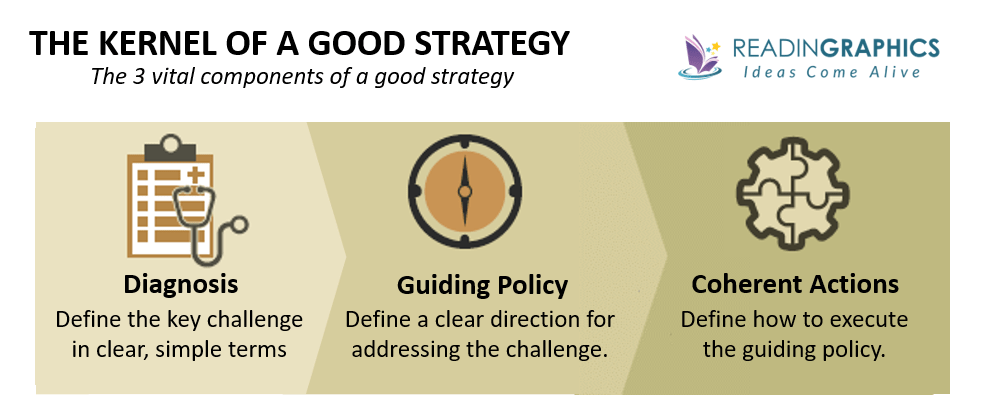
He outlines 3 elements of any effective strategy:
You can use these key questions to get you started.
- Diagnosis – What’s the real problem or opportunity?
- Guiding Policy – What’s your big-picture approach to tackle it?
- Coherent Action – What specific steps will you take to move forward?
For example, online small businesses in the infancy stage will aim to get their cash flow moving. This happens by kickstarting customer acquisition. With this diagnosis, they can focus on marketing at minimal cost as their guiding policy. And they can follow through with coherent actions, with digital marketing efforts like building a following on social media and nurturing the audience through email marketing.
That’s what a good strategy looks like in action.
Must-Read Business Growth Books to Help You Scale Smarter
Here are 5 essential books to guide your business growth journey—each one offers practical frameworks and real-world strategies to help you scale without chaos:
The E-Myth Revisited by Michael Gerber
The E-Myth Revisited shows why most small businesses stall and how to fix it. Introducing the 3 stages of growth, Gerber guides the reader in their shift from working in your business to working on it.
Traction by Gino Wickman
Traction introduces the EOS® system which includes clarifying your vision, solving issues, and building a team. This system can help you scale your business smoothly and sustainably.
Good Strategy Bad Strategy by Richard Rumelt
What separates real strategy from fluff? As we’ve seen above, Rumelt’s 3-part framework (Diagnosis, Guiding Policy, Coherent Actions) will help you create strategies that actually move the needle with Good Strategy Bad Strategy.
Blue Ocean Strategy by W. Chan Kim & Renée Mauborgne
If you need help with effective market development, this is the book for you. Blue Ocean Strategy teaches business owners how to create uncontested market space by focusing on innovation, not competition.
Zero to One by Peter Thiel
The secret behind truly innovative businesses is explained with Zero to One. This book is packed with bold ideas about creating value where none existed before.
Check out our full recommendations list with our Best Strategy Book Recommendations article or go deeper with our Business Growth bundle for more strategies, tools, and case studies to accelerate your business success.
Smarter Business Growth Starts Here
You don’t need a hundred business growth strategy hacks or another endless to-do list. What you need is clarity—about where your business is, what’s holding it back, and the exact levers to pull next. This applies for both small businesses and large multi-national companies.
If you don’t know where to start, choose one business growth strategy and apply it consistently. Because strategic growth isn’t about doing more. It’s about doing what matters better, smarter, and with purpose.
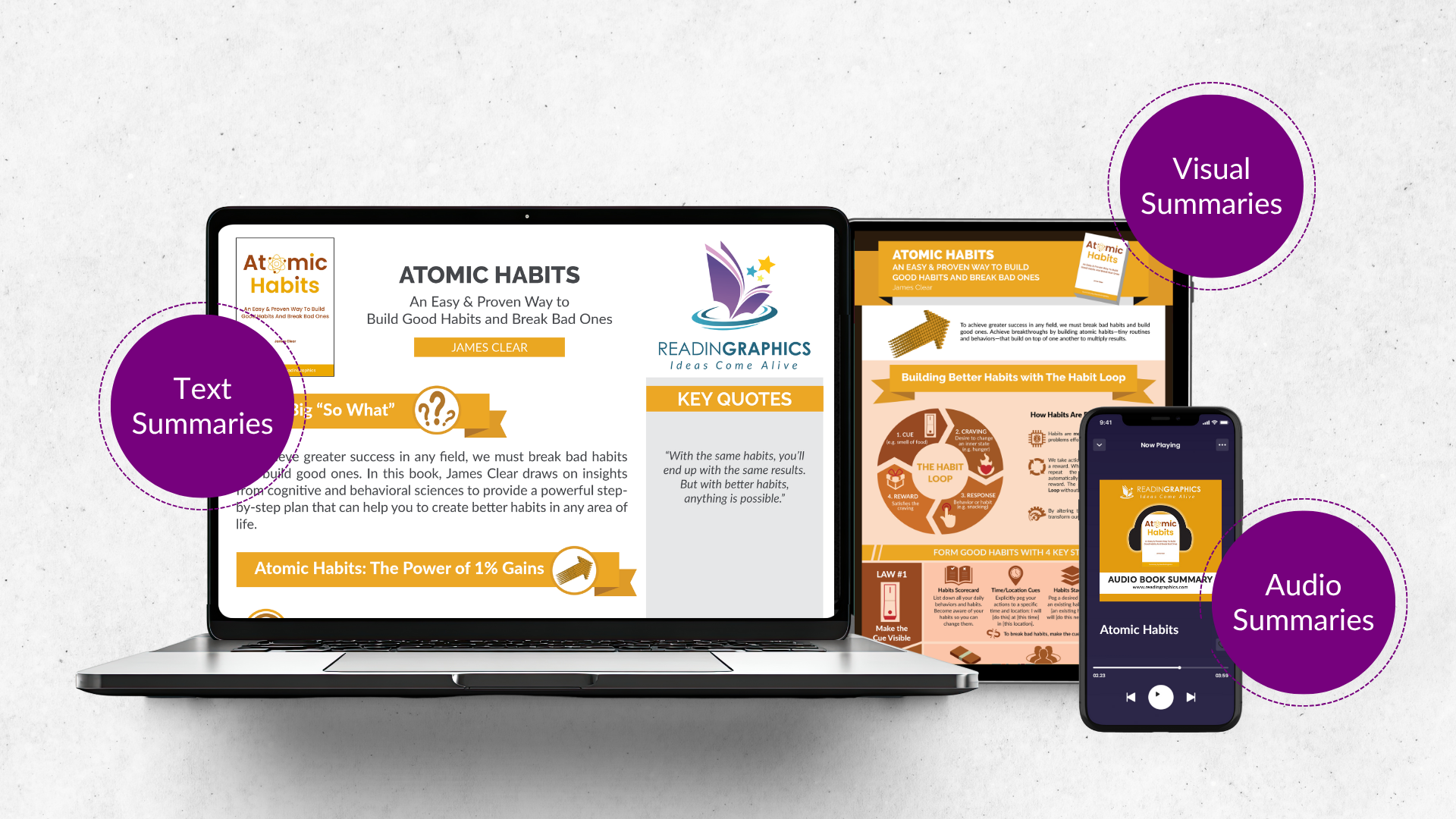
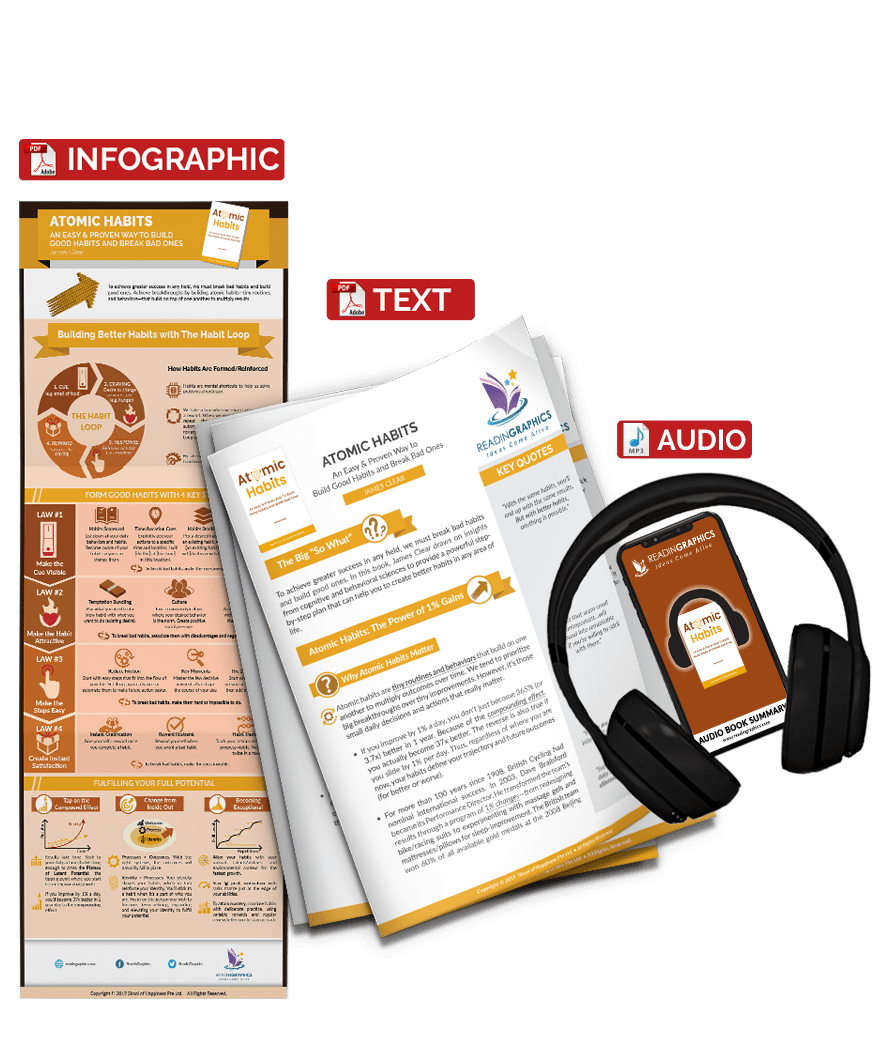
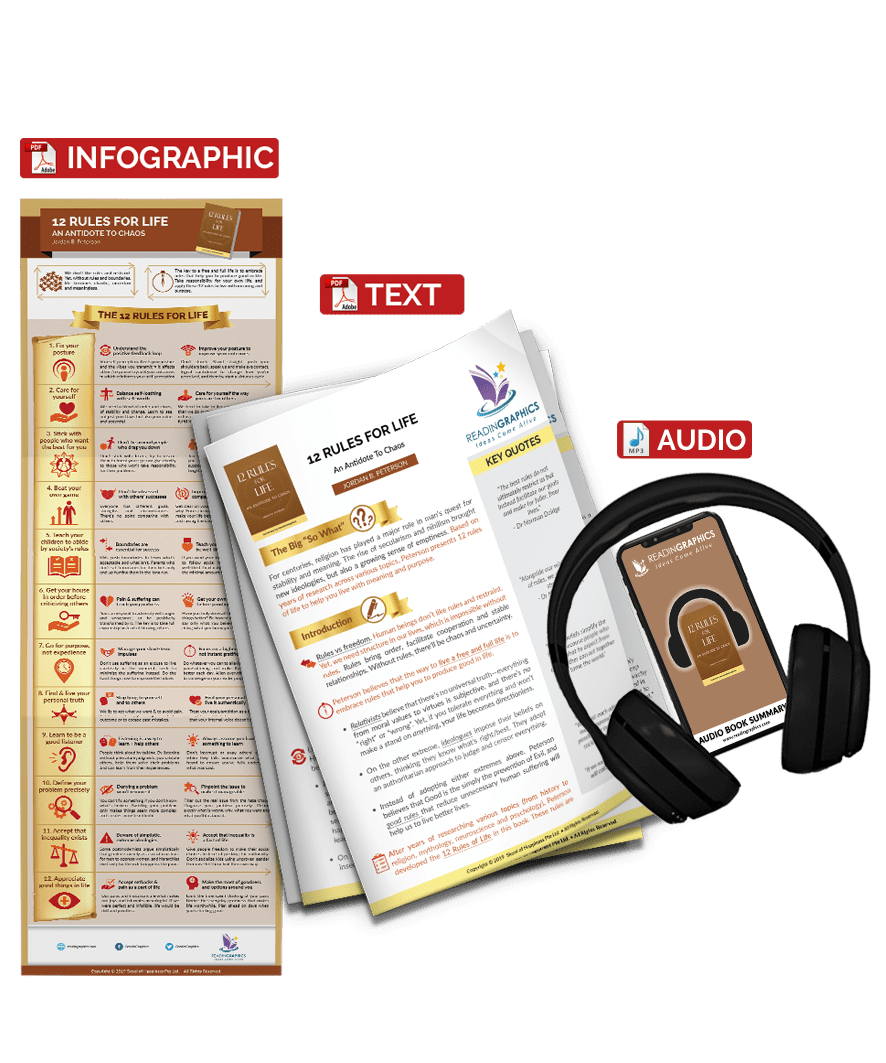
Ready to make it happen? Explore Readingraphics’ text, visual, and audio summaries of the best books on business growth and development. Take the first step today—Subscribe to access all these great titles AND more than 300 other best-selling book summaries to grow your thriving business!